Creative approaches to built-in desks that live alongside the room rather than interrupt it
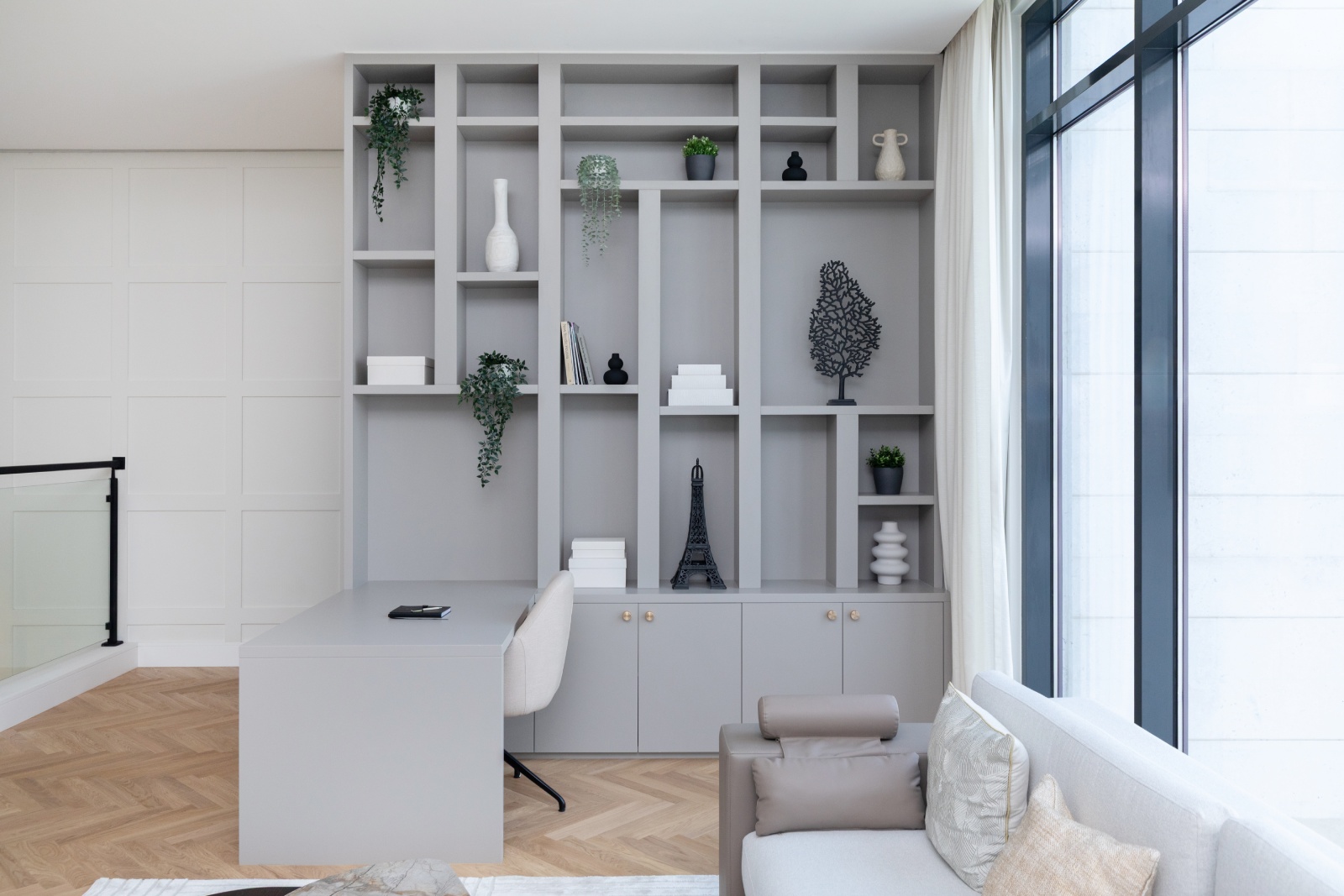
A built-in desk can be one of the most useful additions to a home, a dedicated place to work that doesn’t take over the room it’s in.
The challenge is proportion, material, detailing, and relationship. When those four things are resolved, a built-in desk stops reading as a workstation and starts reading as part of the architecture. When they aren’t, the desk announces itself in a way that works against an otherwise well thought out room.
Start With the Room, Not the Desk
The desk shouldn’t be the first thing you notice when you walk in.
Before deciding on size or configuration, the room itself gives you most of the answers. A bedroom calls for something quieter, a surface and storage that sit close to the wall plane and don’t interrupt the calm the room is meant to hold. In a living room, the desk may need to be almost indistinguishable from the surrounding cabinetry, sharing its proportions and finish so completely that a visitor might not immediately register it as a workspace at all.
The built-in is responding to scale, architecture, material, and sightlines, all at once. When that response is right, the desk belongs. When it’s designed in isolation, it competes.
Make the Cabinetry Read Like Furniture
The clearest way to move a built-in away from built-in territory is to bring furniture logic to its detailing.
Furniture-style proportions means understanding that furniture is rarely as deep, as tall, or as flat-fronted as cabinetry tends to be. A desk that borrows from furniture thinking might have inset doors with a reveal, framed panels instead of flat slab fronts, decorative hardware that relates to something elsewhere in the room, or a finish depth that reads more like a piece than a fitting.
Material choice changes the entire perception of what the desk is. A warm, figured wood makes it read as a writing table. A stone surface gives it the presence and weight of a console. These aren’t purely aesthetic decisions, they’re about what the desk communicates to the room and to the person sitting at it. A desk that feels like furniture invites a different kind of work than one that feels like office infrastructure.
Think About the Chair as Part of the Composition
The chair is a design decision, not an afterthought.
In a more formal room, an upholstered chair in a fabric that relates to the surrounding textiles pulls the workspace into the same register as the rest of the room. In a more relaxed setting, a simple wood or woven chair can feel more native to the space. What matters is that the chair is considered alongside the desk rather than selected afterward, its shape, scale, and material are part of what makes the built-in read as intentional.
Let the Lighting Make It Feel Residential
When the lighting at a desk feels residential, the workspace does too.
A small wall sconce positioned at the right height can give a built-in desk the quality of a reading nook, contained, warm, and distinct from the rest of the room’s lighting. It also means the desk can be used in the evening without pulling in a floor lamp or relying on overhead light that was designed for the whole room rather than this corner of it.
The lighting fixture is part of the composition. Choosing one that relates to other decorative lighting in the room – in finish, scale, or visual weight – is what separates a workspace that feels designed from one that feels assembled.
Plan for Technology From the Beginning
Cables, chargers, and outlets are easiest to manage when they’re designed in, not worked around afterward.
Concealed outlets built into the desk surface, integrated cable management within the cabinetry, and drawers sized for the things you actually use daily, these decisions keep the surface calm without making the desk impractical.
Planning for technology at the design stage also means thinking about where devices sit, how they charge, and where cords travel before the cabinetry is built and those routes are closed off.
Let the Materials Relate, Not Match
A built-in desk doesn’t need to match every other piece in the room. Matching too closely tends to make a space read as overly coordinated rather than considered.
What works instead is relationship. A wood tone that picks up the warmth of the flooring. A stone surface that carries the same mineral quality as the fireplace surround. Hardware that shares a finish with the lighting. These connections don’t announce themselves, they’re the reason the room holds together without anyone being able to say exactly why.
That’s the difference between a built-in that was designed for the room and one that was designed and then placed in it.