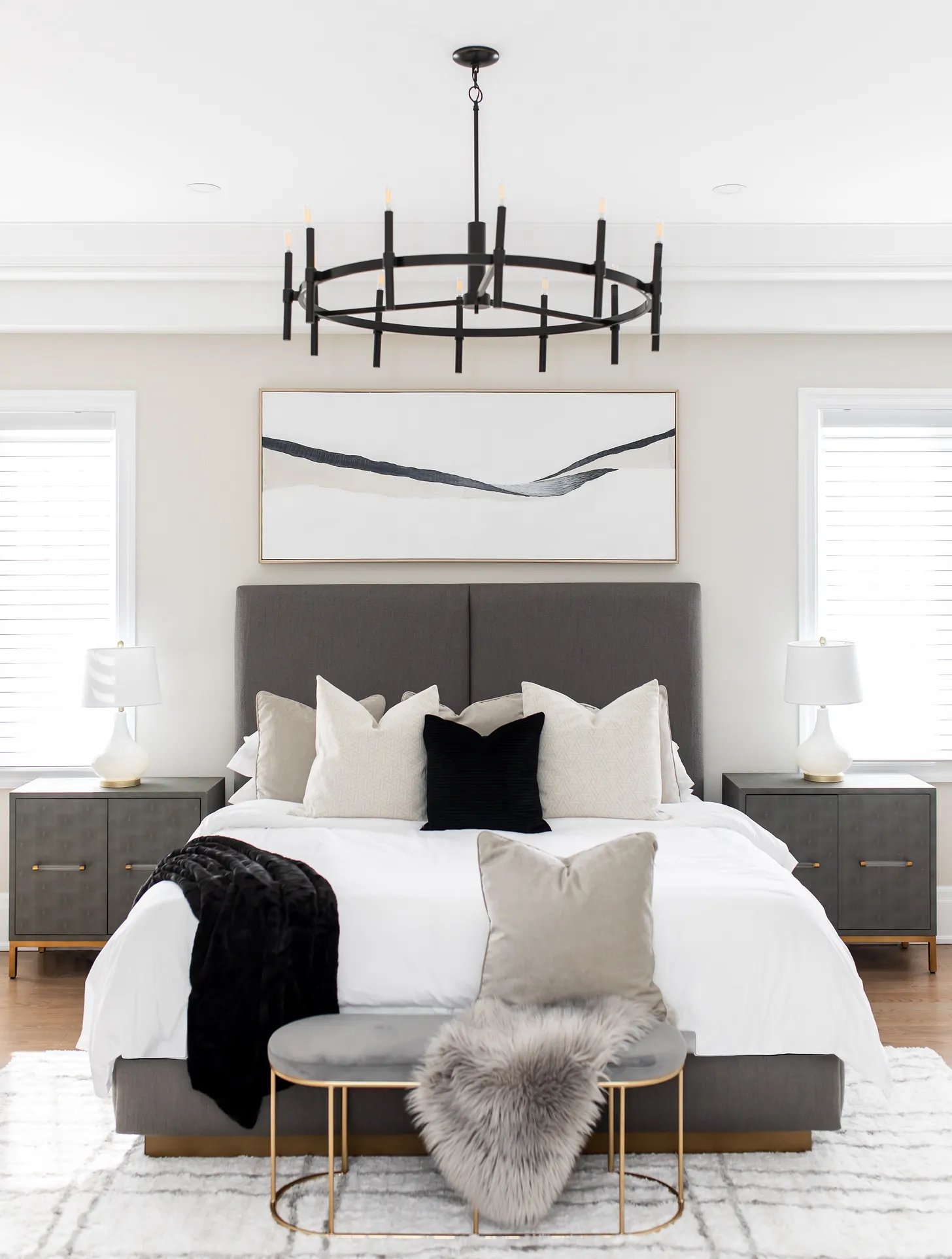
The statement piece that’s more versatile than most people think.
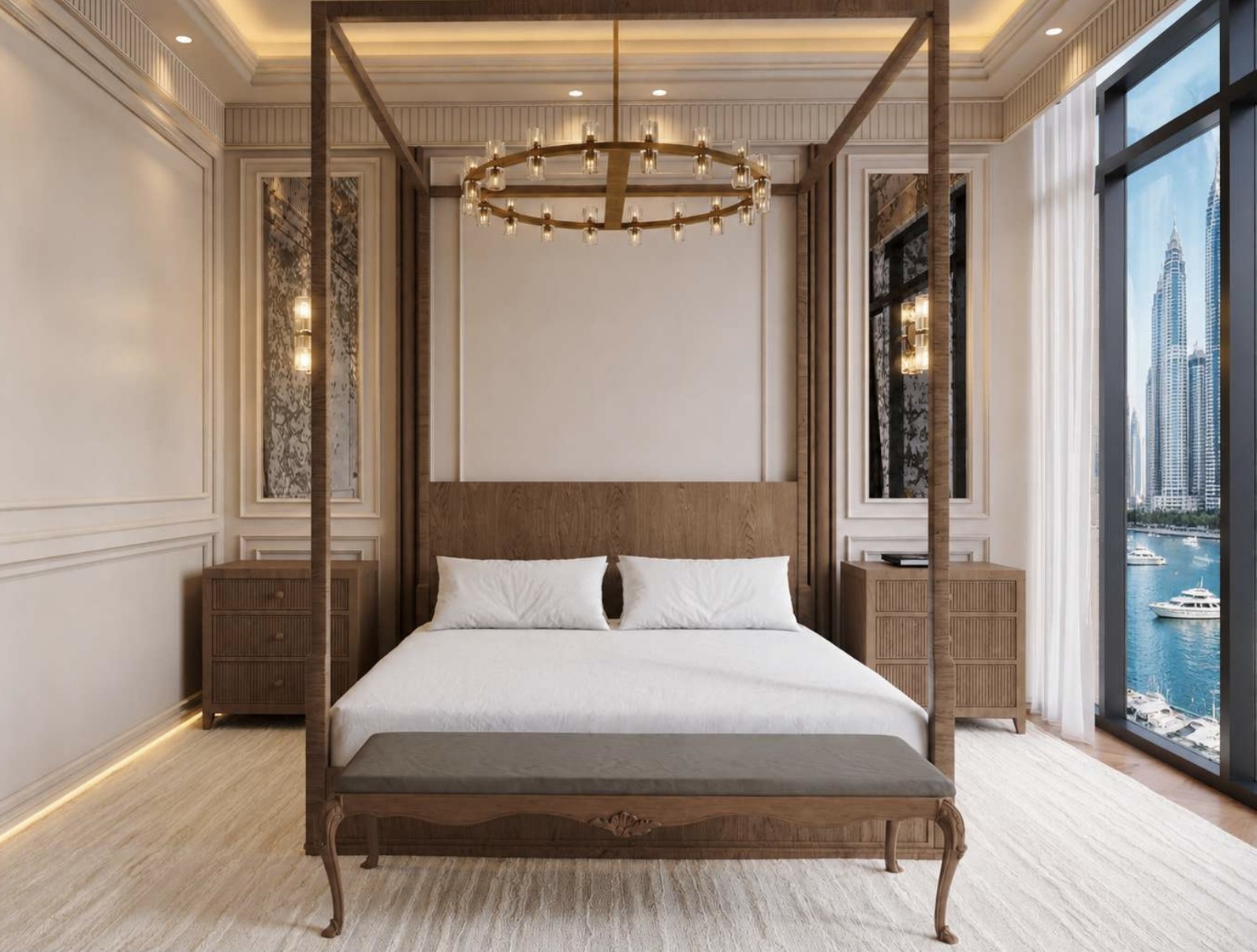
One of the biggest misconceptions about canopy beds is that they’re only suited to large homes with soaring ceilings.
In reality, a well-proportioned canopy can work beautifully in almost any bedroom. The secret isn’t having more space. It’s choosing the right scale, the right materials, and allowing the bed to become the focal point of the room.
When designed thoughtfully, a canopy doesn’t overwhelm a space. It gives it structure, presence, and a sense of intention.
Start with the Scale
The first thing we consider is proportion.
A smaller bedroom benefits from a slimmer, more open frame that allows light to move freely through the room. In a larger primary suite, the bed can take on a stronger presence, paired with a bench or seating area to create a more layered, hotel-inspired feel.
The goal is never to fill the room. It’s to make the room feel balanced.
Choose a Material That Sets the Tone
The frame itself says a lot before you introduce any other furniture.
Wood brings warmth and timelessness, while metal or acrylic creates a lighter, more contemporary feel. Every material carries a different personality, so choosing the frame early makes it much easier to build the rest of the room around it.
Rather than competing with the bed, every other finish should support it.
Consider Whether the Bed Needs Drapery
Not every canopy needs fabric.
In some homes, leaving the frame open creates a clean architectural statement. In others, soft linen panels introduce warmth and softness without making the room feel enclosed.
The decision should always reflect the mood you’re trying to create, not simply follow a trend.
Build Comfort Through Layers
A canopy naturally draws attention, which means the bedding deserves just as much consideration.
Layering quality linens, supportive pillows, textured throws, and soft fabrics creates depth while making the room feel genuinely comfortable. Luxury isn’t about adding more pieces. It’s about choosing the right ones.
Let the Bed Lead the Room
Once the bed is in place, every other design decision becomes easier.
Nightstands, lighting, artwork, and storage should complement the bed rather than compete with it. If the frame is detailed and decorative, surrounding furniture can remain simple. If the frame is understated, it leaves room for stronger accents elsewhere.
A room feels most cohesive when every piece understands its role.
Don’t Ignore Ceiling Height
Ceiling height plays a much bigger role than most people expect.
Higher ceilings allow for taller frames that emphasize the room’s proportions. Lower ceilings often benefit from a more restrained silhouette that still creates presence without overwhelming the space.
Getting this balance right is what makes a canopy feel intentional rather than oversized.
Finish with the Right Lighting
Lighting has the ability to completely change how a canopy bed is experienced.
Pendant lights create a clean, contemporary look, while wall sconces feel softer and more traditional. Both work beautifully when they are scaled correctly and layered with warm ambient lighting.
It’s often these finishing details that elevate the entire room.
A Statement That Never Feels Overdone
A canopy bed isn’t reserved for grand homes or formal interiors.
When it’s chosen with the right proportions and supported by thoughtful design decisions, it becomes more than a piece of furniture. It becomes the element that gives the entire bedroom its sense of balance, warmth, and character.