Looking beyond paint to create a ceiling with character
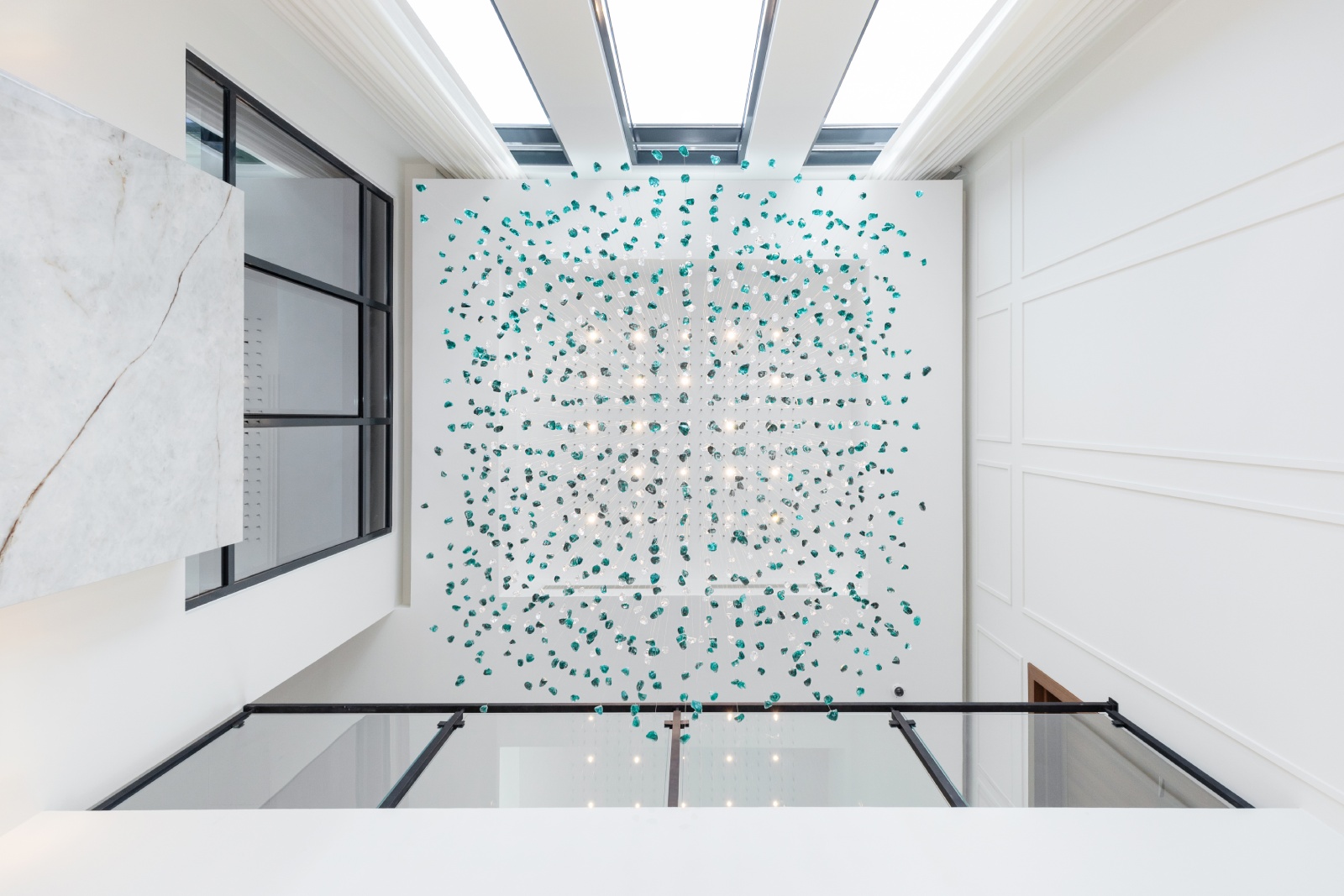
Most designers will tell you the ceiling is the last surface people think about. We’d argue it should be one of the first.
Every other surface in a room gets considered, walls, floors, furniture, lighting. The ceiling gets a coat of white paint and is promptly forgotten. But architecturally, it has just as much influence on how a room feels as anything else. It can add warmth, emphasize proportion, introduce texture, or give the eye something unexpected to rest on.
That doesn’t mean every ceiling needs to make a statement. Sometimes the most successful treatment is subtle. The key is knowing what the room can carry and that starts with understanding the architecture itself.
Start With the Architecture
Before we choose any ceiling treatment, we look at the room as a whole. The height of the ceiling, the proportions of the space, the existing architectural details, all of these determine what the ceiling can actually do.
A room with very high ceilings and an open plan reads differently than a low, intimate space. In the first, a ceiling treatment can bring the room down to a human scale, adding warmth and definition where the architecture might otherwise feel vast. In the second, even a simple perimeter detail can make the space feel more resolved and considered.
The ceiling treatment should feel like it grew out of the architecture rather than something that was applied to a surface that happened to be there.
Let Beams Add Structure
Exposed or decorative beams give a room an immediate sense of permanence and craft.
In a more traditional home, substantial wood beams bring warmth and character that’s hard to achieve any other way. In a contemporary space, slimmer beams or a restrained grid introduce structure without weight. The difference between beams on a ceiling and pattern on a wall is that beams don’t decorate the room, they define it. They create a framework the eye follows, establish rhythm, and give the architecture a logic that feels intentional rather than decorative.
Proportion is everything here. Beams that are too large for the room overwhelm it. Beams that are too delicate disappear.
Use Wallpaper Where You Least Expect It
Wallpaper on a ceiling works in a way it simply cannot on a wall.
Because it sits above eye level, the effect is more immersive than immediate. You notice it as an atmosphere before you notice it as a pattern. In smaller spaces, a powder room, a bedroom, an intimate dining area, a patterned or textured ceiling can add an entire layer of depth without requiring anything else to change in the room.
Sometimes a subtle texture overhead can do more for a room than a heavily coffered ceiling that announces itself too loudly.
Bring In Millwork
Coffered ceilings, paneling, trim, and perimeter details can transform a flat ceiling into something genuinely architectural.
The treatment doesn’t need to be elaborate. A simple grid or a clean perimeter molding can give a room stronger proportions and a more finished quality, the kind that makes a space feel complete without being able to pinpoint exactly why. Millwork works best when it’s in conversation with other details already in the room: wall paneling, cabinetry, door casings. When it connects to what’s below, it reads as architecture. When it doesn’t, it reads as decoration.
Consider Plaster for Texture
Plaster brings a softness that paint simply cannot replicate.
A hand-finished plaster ceiling introduces subtle variation, movement, and depth while keeping the palette entirely quiet. It’s especially beautiful alongside natural materials – stone, wood, linen – where the warmth of one surface draws out the warmth of another. The appeal is in what you don’t immediately notice. There’s no bold pattern, no obvious gesture. Instead, the ceiling shifts as the light moves across it throughout the day, and the room feels different at noon than it does at dusk.
Design the Ceiling and Lighting Together
A ceiling treatment and a lighting plan are the same decision.
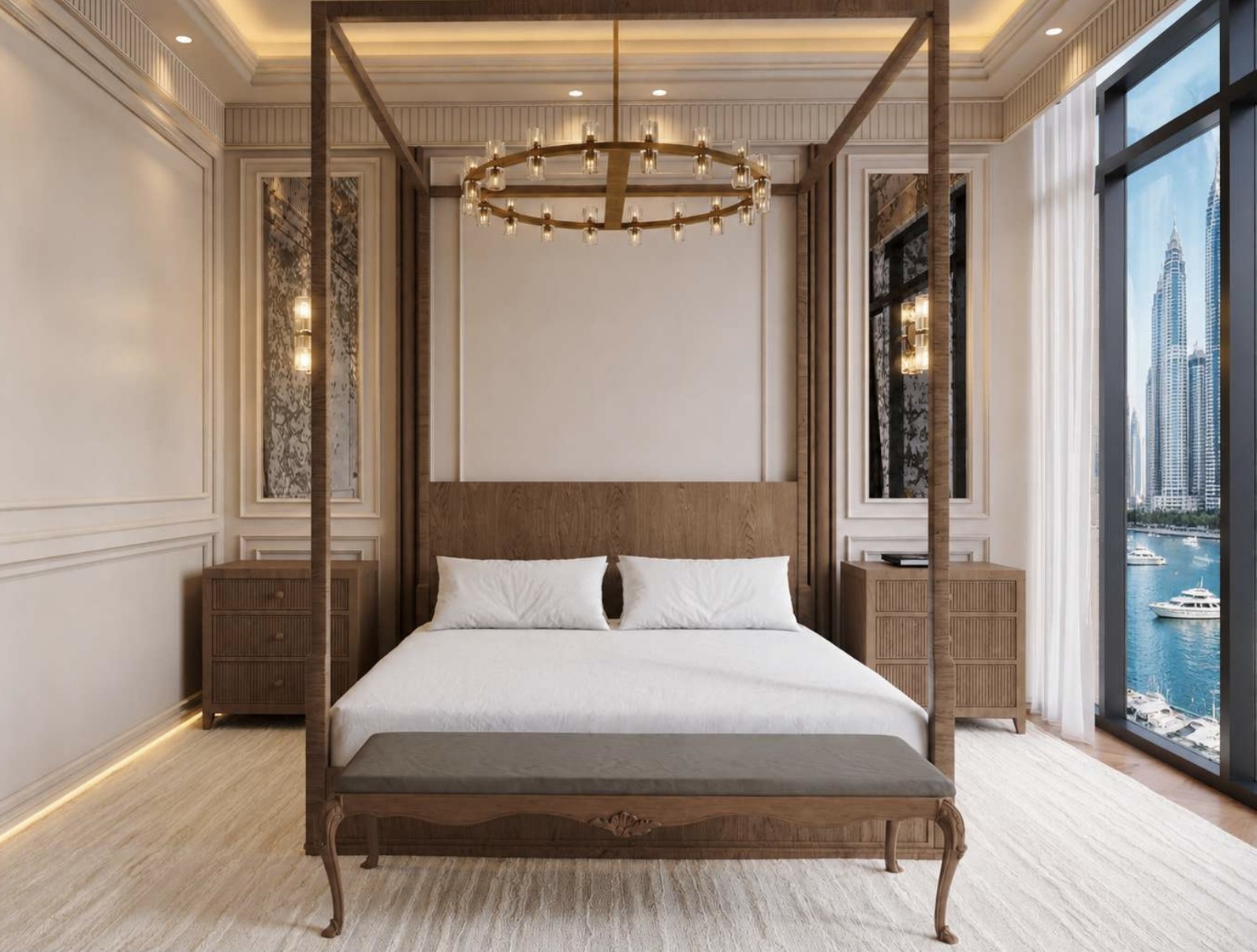
A textured plaster surface catches light in a way a painted ceiling never will, the variation becomes visible, the depth becomes real. A coffered ceiling, designed well, can reinforce a lighting layout and make both feel more resolved. A darker ceiling, which many people hesitate over, can make a room feel more intimate and considered than any amount of furniture arrangement.
Choose one and describe it fully rather than reaching for several effects at once. The ceiling and the light it holds are one design decision, not two.
Know When to Keep It Simple
Restraint is also a design choice, and often the harder one to make.
If a room already has strong flooring, considered millwork, statement furniture, and layered textiles, the ceiling may need only to be calm, proportionate, and connected to everything below it. Adding another major element overhead in a room that’s already resolved can work against the whole.
Good design is knowing which ideas the room actually needs and having the confidence to stop there.
Look Up
Beams, wallpaper, millwork, plaster, and thoughtful lighting can each change the character of a room without changing its footprint.
The ceiling is the one surface that has never been crowded out by furniture, art, or daily life. It’s entirely open. And in that openness, there’s more design potential than most rooms ever use.
The next time you walk into a room, look up. The fifth wall is rarely finished. It’s almost always waiting.